
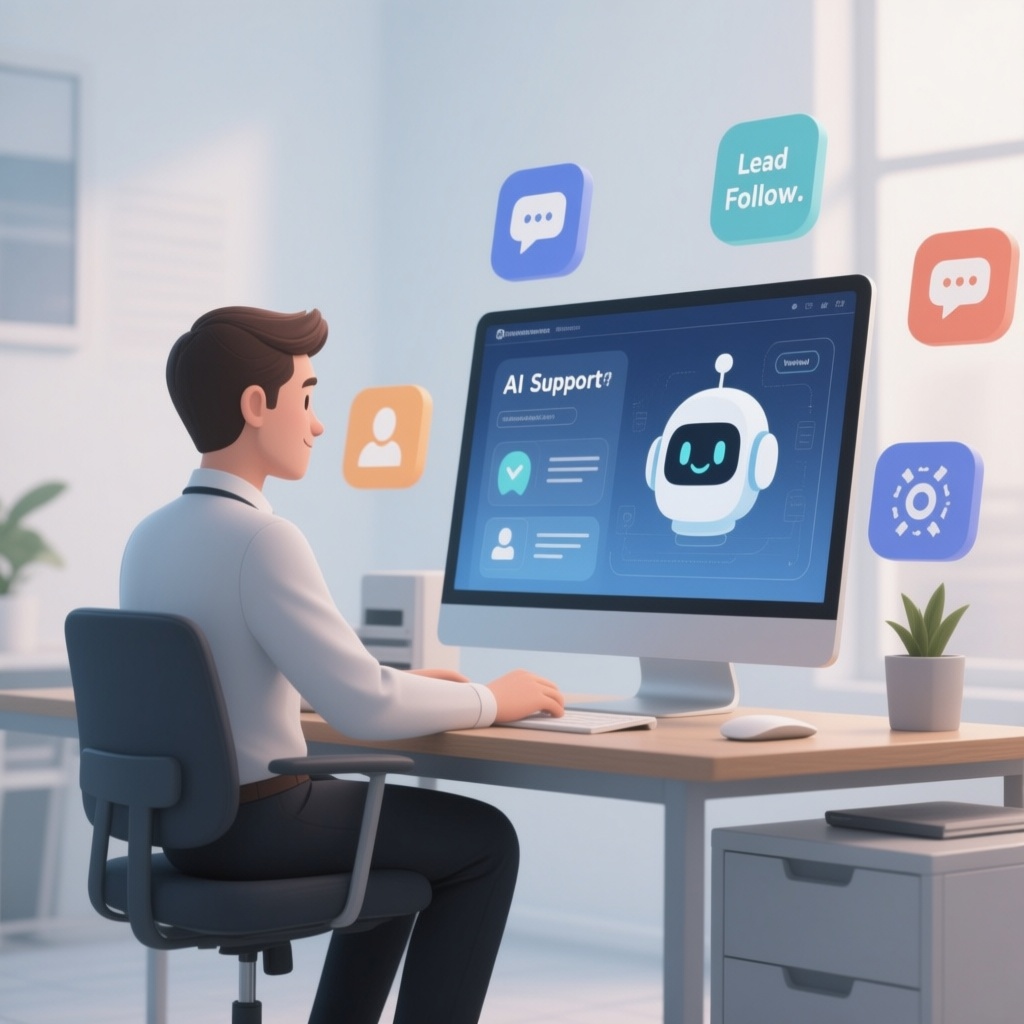
AI Agents for Small Business: Practical Use Cases and How to Start
Artificial intelligence is no longer a tool reserved for enterprise giants. Small and medium-sized businesses (SMBs) are now using AI agents to handle repetitive tasks, respond to customers instantly, and streamline operations. But what exactly is an AI agent, and how can your business benefit without a massive IT budget?
What is an AI Agent?
An AI agent is a software program that uses artificial intelligence to perform tasks autonomously. It can understand natural language, make decisions based on rules or learned patterns, and take action—such as answering a customer question, scheduling a meeting, or updating a CRM record. Unlike a simple chatbot that follows a script, an AI agent can learn from interactions and improve over time.
Why Small Businesses Should Care About AI Agents
For many SMBs, time and resources are stretched thin. AI agents can take over repetitive, time-consuming tasks, freeing your team to focus on high-value work. They also provide 24/7 availability, consistent responses, and the ability to scale without adding headcount. According to a recent survey, businesses that adopt AI for automation report significant time savings and improved customer satisfaction.
Key Benefits at a Glance
- Cost efficiency: Reduce labor costs for routine tasks.
- Speed: Respond to customers instantly, any time of day.
- Accuracy: Minimize human error in data entry and follow-ups.
- Scalability: Handle increased volume without hiring more staff.
Practical Use Cases for Small Businesses
AI agents can be applied across various business functions. Here are the most impactful areas for SMBs:
1. Customer Support Automation
An AI agent can handle common queries like order status, return policies, or business hours. It can also escalate complex issues to a human agent when needed. This reduces response times and improves customer experience.
2. Lead Qualification and Follow-Up
AI agents can engage website visitors, ask qualifying questions, and route hot leads to your sales team. They can also send follow-up emails or SMS messages, ensuring no lead falls through the cracks.
3. Internal Workflow Automation
From approving expense reports to scheduling meetings, AI agents can automate internal processes. They can integrate with your CRM or ERP to update records, send notifications, and trigger actions based on specific conditions.
4. Data Entry and Reporting
AI agents can extract data from emails, forms, or documents and populate your systems. They can also generate daily or weekly reports, giving you real-time insights without manual effort.
5. Personalized Marketing
AI agents can segment your audience, personalize email campaigns, and recommend products based on customer behavior. This increases engagement and conversion rates.
How to Start Implementing AI Agents
Adopting AI doesn’t require a complete overhaul of your systems. Here is a step-by-step approach:
- Identify pain points: Look for tasks that are repetitive, time-consuming, or prone to error.
- Define success metrics: Decide how you will measure the impact (e.g., response time, cost savings, lead conversion).
- Choose a pilot project: Start with one use case, such as customer support or lead follow-up.
- Select the right tools or partner: You can use off-the-shelf AI tools or work with a development company like PrismVertex to build custom AI agents that integrate with your existing systems.
- Train and test: Feed the AI agent with relevant data and test it thoroughly before full deployment.
- Monitor and optimize: Continuously review performance and make adjustments.
AI Agents vs. Traditional Automation
Traditional automation follows predefined rules, while AI agents can adapt and learn. For example, an automated email responder can send a fixed reply, but an AI agent can understand the customer’s intent and provide a tailored response. This makes AI agents more flexible and effective for complex tasks.
Potential Challenges and How to Overcome Them
Implementing AI agents isn’t without challenges. Common concerns include data privacy, integration complexity, and employee resistance. Here’s how to address them:
- Data privacy: Ensure your AI solution complies with GDPR, CCPA, or other regulations. Work with a provider that prioritizes security.
- Integration: Choose a solution that integrates with your existing CRM, ERP, or other tools. Custom development can bridge gaps.
- Employee buy-in: Communicate that AI agents are meant to assist, not replace, your team. Involve employees in the process.
When to Consider Custom AI Development
Off-the-shelf AI tools may not fit your unique workflows. If you need AI agents that integrate deeply with your business processes, handle specific data, or require custom logic, it’s worth investing in custom AI development. PrismVertex specializes in building AI solutions tailored to small and medium businesses.
Frequently Asked Questions
How much does it cost to implement an AI agent?
Costs vary widely depending on complexity and scope. Off-the-shelf tools may cost a few hundred dollars per month, while custom AI agents can range from a few thousand to tens of thousands of dollars. It’s best to start with a pilot and scale as you see ROI.
Do I need a technical team to manage AI agents?
Not necessarily. Many AI platforms are user-friendly, but you may need technical support for integration and maintenance. A partner like PrismVertex can handle the technical aspects.
Can AI agents work with my existing CRM or ERP?
Yes, most AI agents can be integrated with popular CRM and ERP systems. Custom integration may be required for specialized platforms.
Are AI agents secure for handling customer data?
Security depends on the implementation. Ensure your AI provider follows best practices and complies with relevant regulations. PrismVertex can help you build secure, compliant AI solutions.
Ready to Leverage AI Agents for Your Business?
AI agents offer a practical way to improve efficiency, reduce costs, and enhance customer experience. Whether you’re just starting or need a custom solution, PrismVertex can guide you from concept to deployment. Contact us today to discuss your project.